
Rewards System (Ok, it’s bribery)
Motivation tools built for how ADHD brains actually work.
$26
For families with children ages 4–10
Self-paced online guide
Instant PDF download
Reviewed by a licensed clinical psychologist (PsyD) specializing in neurodivergent youth and families.
The problem we solve
Reward systems for ADHD brains are a different project than reward systems for other kids. Standard approaches stop working fast. If they ever worked at all. The sticker chart isn't the problem. The timing is. ADHD brains struggle with delayed gratification. A reward that lives on next week's horizon doesn't register as motivation today.
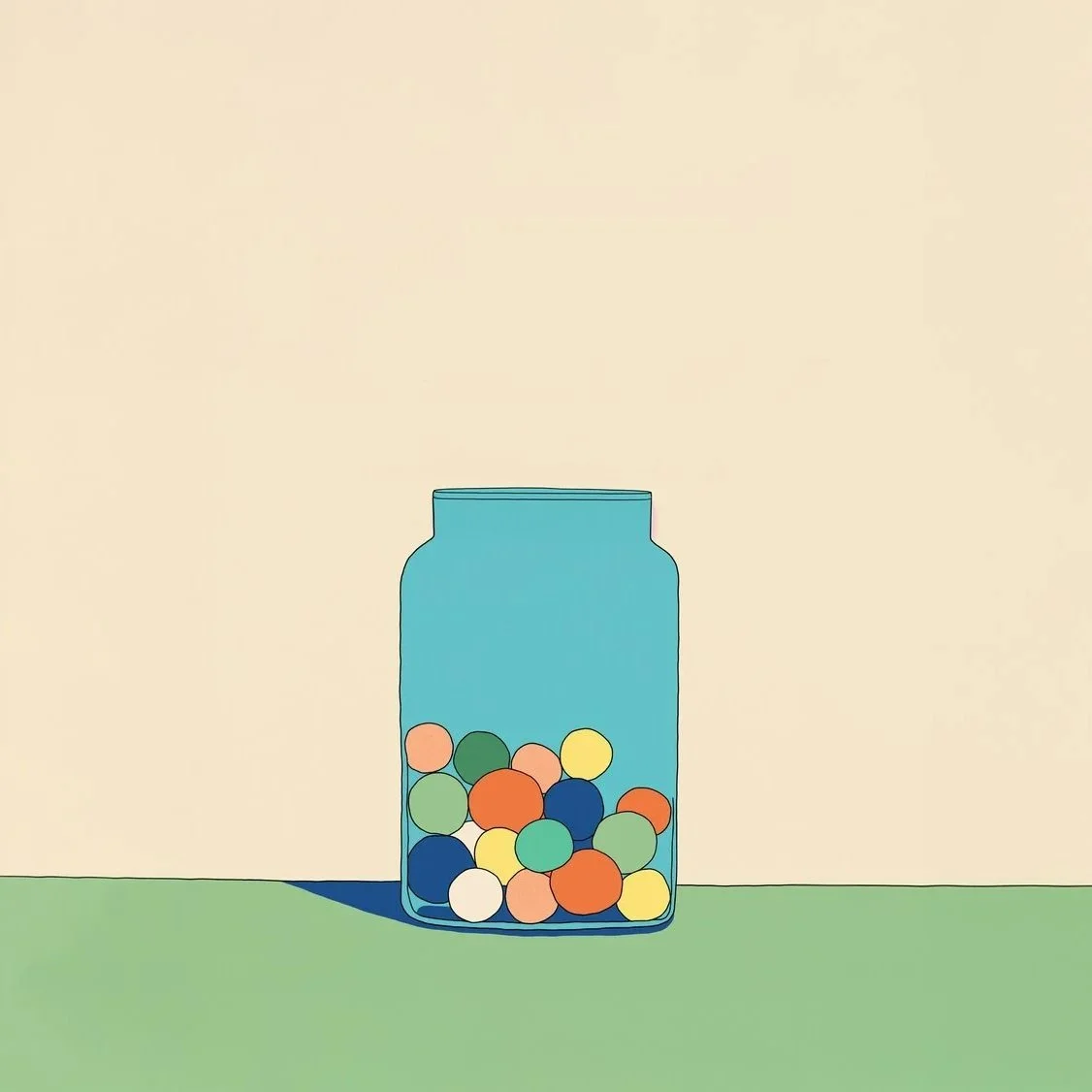
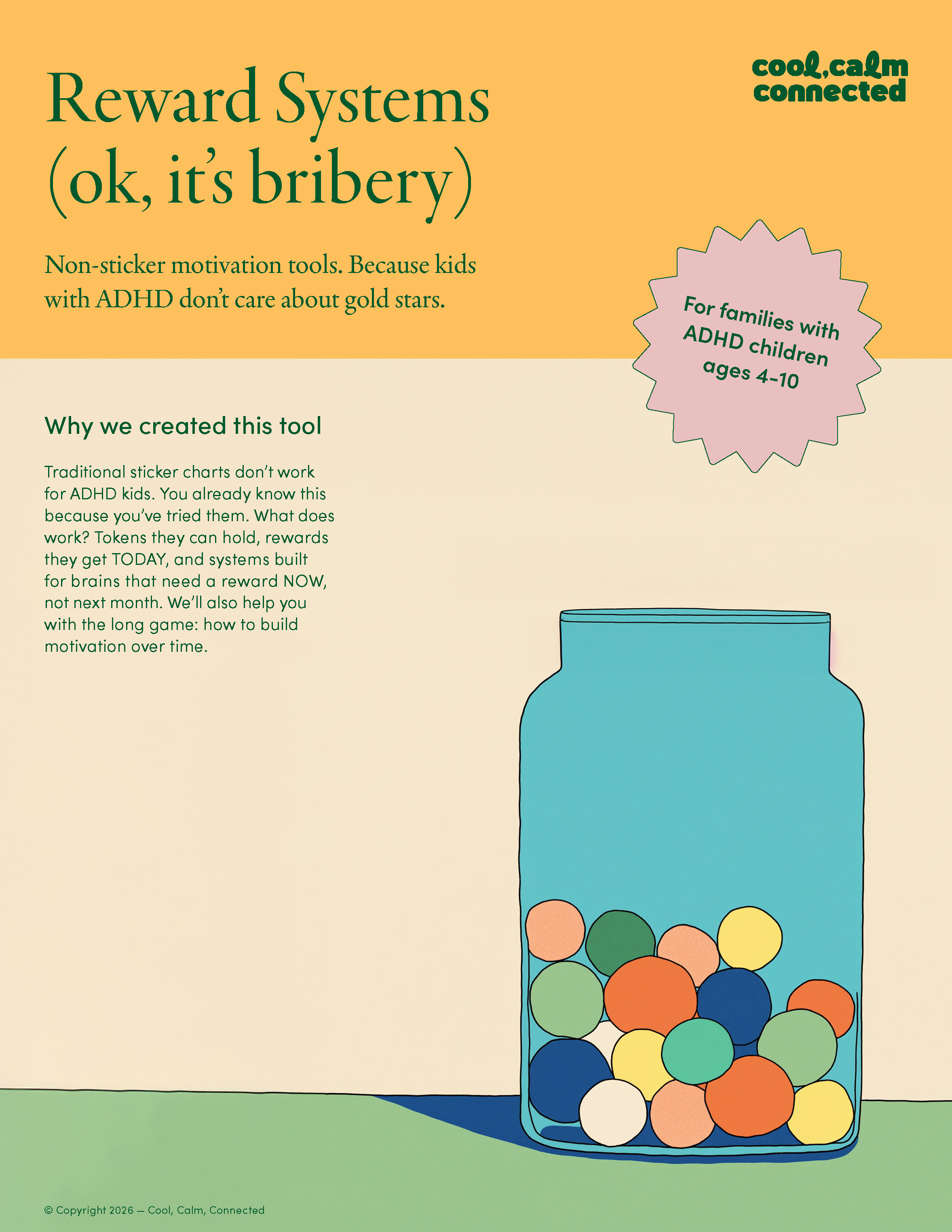
Token economies work because they decouple the immediate reward from the bigger one. Your child earns something they can hold right now. That token is the hit of reinforcement their brain needs in the moment, and it's also building toward something larger. Instant feedback and a longer arc. Both at once.
We also cover how to shift the system over time, because the goal is never a child who needs external rewards forever.
Who it's for
Families with ADHD children ages 4–10 who are tired of the daily battle to get anything done. Parents who've tried reward charts, consequences, pleading — and want a system that creates motivation rather than one that depends on willpower their child doesn't have yet.
Immediate
✳︎
Tangible
✳︎
Frequent
✳︎
Immediate ✳︎ Tangible ✳︎ Frequent ✳︎

Why we made this
I spent years trying to get my child to do things. Simple things. Get dressed. Do homework. Clean his room. Nothing worked for long.
ADHD brains are wired to respond to rewards that happen now. A token in hand the second a task is done creates a connection that lands. Immediately, concretely, in a way your child's brain can use. That's what makes this work when other things haven't.
Novelty matters too. The system that works in September will feel boring by November. That's brain wiring, and it's predictable. A few tools to rotate means you're always a step ahead of it.
Four distinct motivation systems. The neuroscience behind why any of it works. A realistic roadmap for the longer game.
How you use it
Start with the Beginner section and set up the token system. Most families stay there for months. The other systems are ready when you need them — when novelty wears off, when your child ages out of physical tokens, when you need something faster.
If a system stops working, that's expected. The troubleshooting section is there for exactly that.
What you get
A self-paced online guide — available immediately after purchase, work through it at your own pace.
One PDF download, printable at home on any standard printer.
✔ Clinically reviewed.
Worth knowing
This toolkit pairs well with Morning Routine (shoes!!!) and Screen Time Transition (Oh S%*t!) — completing the morning routine earns a token, and so does turning off the screen. External motivation makes both systems keep working in month three, when novelty alone has worn off.
What's included
Beginner
The Token System
Why it works: the short version of the neuroscience
Intermediate
Immediate Privilege Rewards
Timer Challenges — turns boring tasks into games for competition-motivated kids
Points Tracking — for older kids (8+) who've outgrown the jar
The Bank System — how to gently introduce saving and delayed gratification, with scaffolding
Activity-Based Rewards — why experiences beat stuff, plus a full free/low-cost reward menu and the most powerful reward that costs nothing
Natural Consequences — how they work alongside reward systems, not instead of them
Reward menu
Advanced
Customization by age: 4–8, 8–15, and into adulthood
Customization by ADHD type: hyperactive/impulsive, inattentive, combined
Troubleshooting
The Long Game: a realistic timeline for intrinsic motivation — it takes years, here's what that looks like